What it looks like
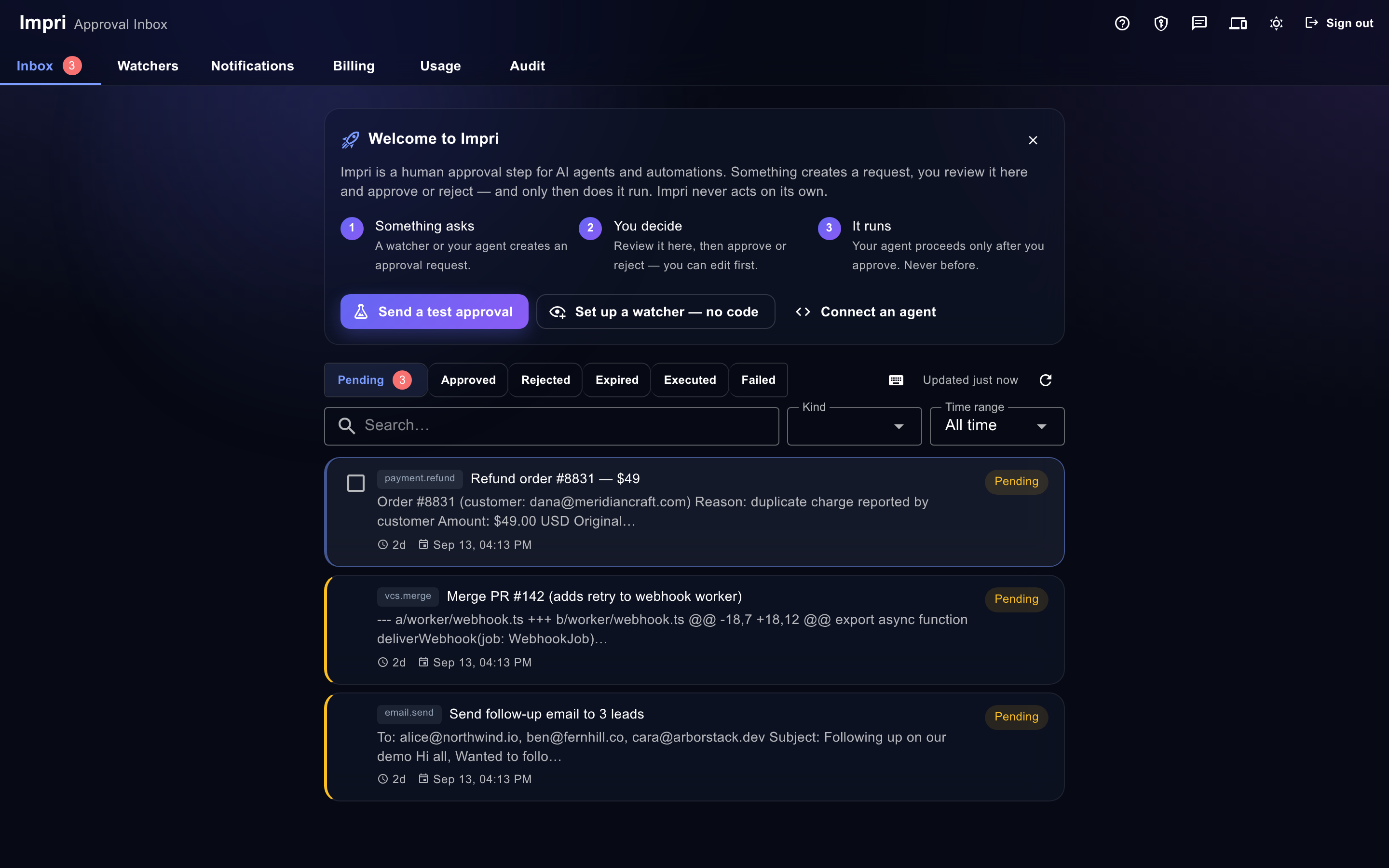
An AI writing agent is fast at drafts and inconsistent at judgment — the same model that nails a blog post outline can also confidently state a wrong statistic, adopt the wrong tone for the channel, or ship a claim your product doesn't back. None of that is obvious until a human reads the final draft with the publish button in mind.
Drafting and publishing are different acts with different risk. You want the agent generating blog posts, social copy, and marketing pages continuously — that's the whole point of using it. You don't want any of it live on a public channel until someone has actually read it, because "read it while writing the prompt" and "read the finished draft that will go out under the company's name" catch different mistakes.
impri_push_action with the full text as the preview instead of calling the CMS or social API directly.preview.format is "markdown" so the reviewer sees real formatting (headings, links, code) in the inbox, not a wall of raw text.impri_await_decision returns the final text; the agent publishes exactly that (not its own draft) via the CMS or social API, then calls impri_report_result with the published URL.
impri_push_action({
  kind: "content.publish",
  title: "Publish blog post: \"5 lessons from our Q3 outage\"",
  preview: {
    format: "markdown",
    body: "# 5 lessons from our Q3 outage\n\nOn August 14th our API was down for 22 minutes. Here's what we changed...\n\n## 1. Timeouts everywhere..."
  },
  target_url: "https://cms.acme.com/drafts/9021",
  editable: ["preview.body"]
})
// -> { action_id: "act_3kx0...", status: "pending", inbox_url: "https://app.impri.dev/inbox/act_3kx0..." }

impri_await_decision({ action_id: "act_3kx0...", timeout_s: 86400 })
// -> { action_id: "act_9wp3...", status: "approved", decision_at: 1757830900, preview: { format: "plain", body: "...human-edited..." }, edited_by_human: true }

impri_report_result({
  action_id: "act_3kx0...",
  status: "executed",
  detail: "Published at https://acme.com/blog/q3-outage-lessons"
})The agent keeps drafting on its own schedule; nothing reaches a public channel under your name without a person reading the actual final text first. Factual slips and tone mismatches get caught before an audience sees them, not after.